How often do you floss? Is it a habit in daily oral hygiene or rather an occasional practice? While brushing your teeth twice a day is very important, flossing is just as important, if not more so, to maintaining optimal oral health. So let's take a deeper look at this issue in this article.
Why is flossing important?
Flossing should never be underestimated when it comes to a healthy smile. Here are some top reasons why flossing is extremely important:
1. Removal of dental surface buildup and prevention of tartar formation
Flossing helps to remove dental surface buildup - bacteria that forms on the surface of the teeth.
Regular brushing and flossing prevents the formation of tartar, which can lead to tooth decay and gum disease.
2. Reaches areas that a toothbrush cannot
A toothbrush cannot effectively clean the interdental and gum lines, so dental surface buildup and bacteria are more actively formed in these areas.
Flossing helps reach these hard-to-clean areas, providing thorough and comprehensive oral hygiene.
3. Maintaining healthy gums
Flossing not only helps keep your teeth clean, but it also plays a vital role in maintaining healthy gums.
By removing surface buildup and preventing gum disease, flossing reduces the risk of gingivitis, bleeding, and even tooth loss.
How to floss correctly
Now that we understand the importance of flossing, let's focus on proper flossing technique for maximum efficiency:
1. Choose an appropriate dental floss
There are different types of dental floss – waxed, unwaxed, flavored and filamentous.
Choose a dental floss that suits your preferences and needs, e.g. floss or dental floss with holder.
2. Start by taking a long enough strand of dental floss
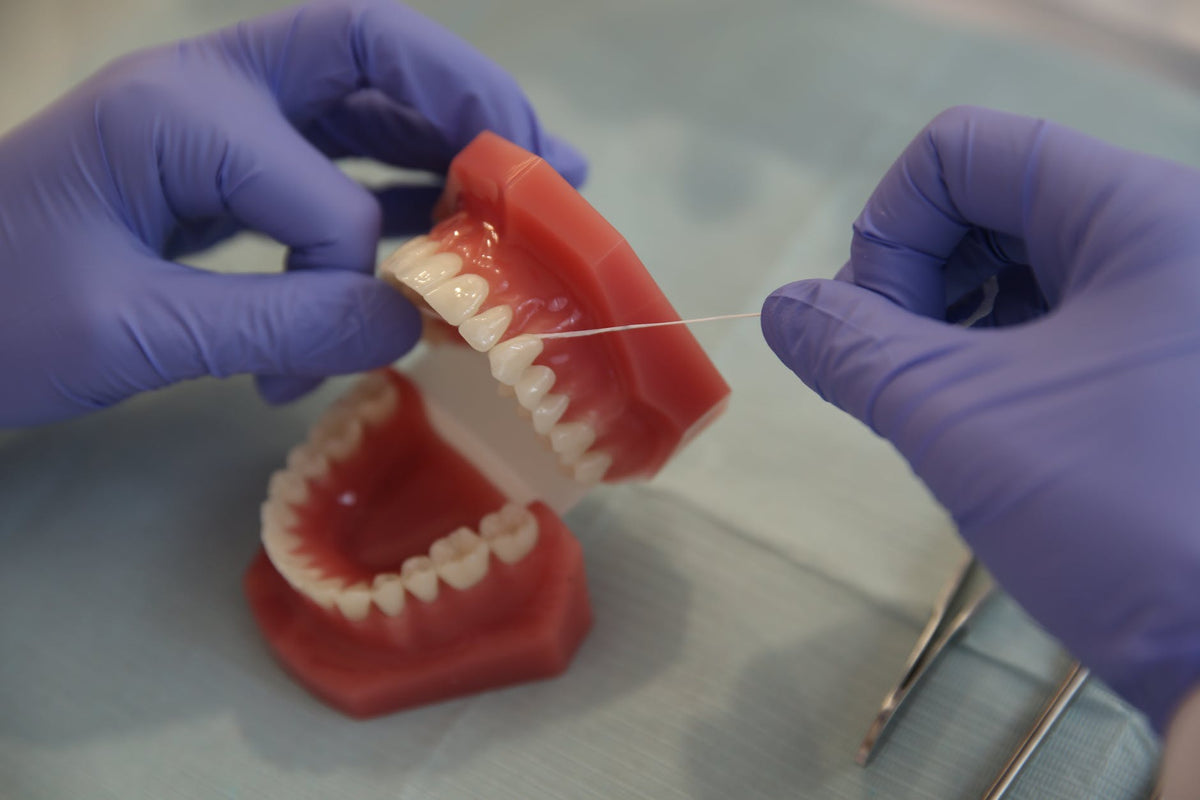
Take about 35-46 cm of dental floss and wrap it around your middle or index fingers, leaving some of the floss free to clean with a fresh section of floss.
3. Gently slide it between your teeth
Gently move back and forth so as not to injure the gums.
Thread the floss around the base of each tooth, making sure it reaches below the gum line.
4. Be careful and take care of your gums
Use a clean section of floss for each tooth, as reusing the same section can spread bacteria.
Remember to be gentle to prevent gum irritation while effectively removing surface buildup.
5. Do not forget about the back part of the last tooth
Many tend to forget about the back of the last tooth when flossing, but it is equally important to clean this area thoroughly as it tends to be the most bacteria-rich.
6. Rinse and repeat
After flossing, rinse your mouth to remove any debris or surface buildup from brushing. Repeat this process daily to maintain a healthy smile.
Frequently asked questions
Q: How often should you floss?
A: Floss should be used at least once a day, preferably before brushing.
Q: Can I replace dental floss with an irrigator?
A: Irrigator is an excellent way to clean not only between the teeth, but also the surface buildup on the top or back of the tooth near the gums, so everyone should understand the most convenient way and approach.
Q: Are there alternatives to traditional dental floss?
A: Yes, for example dental floss with holder. This will make the cleaning process easier and help you avoid the difficulty of gripping the floss between your fingers.
Q: Is flossing painful?
A: Flossing should not cause pain. If you feel discomfort or bleeding, try it water flosser or consult a dentist to find the best solution for you.
Q: Can children floss?
A: Children can start flossing as soon as they have two teeth that meet. A dental hygienist's advice, guidance and parental supervision are essential to ensure proper brushing technique.
Flossing may seem like a trivial task, but its impact on oral health is significant. It is an important step towards a healthy smile, healthy gums and fresh breath. So floss or use alternatives like an water flosser to keep your smile sparkling!
Klinii journal